Biosketch
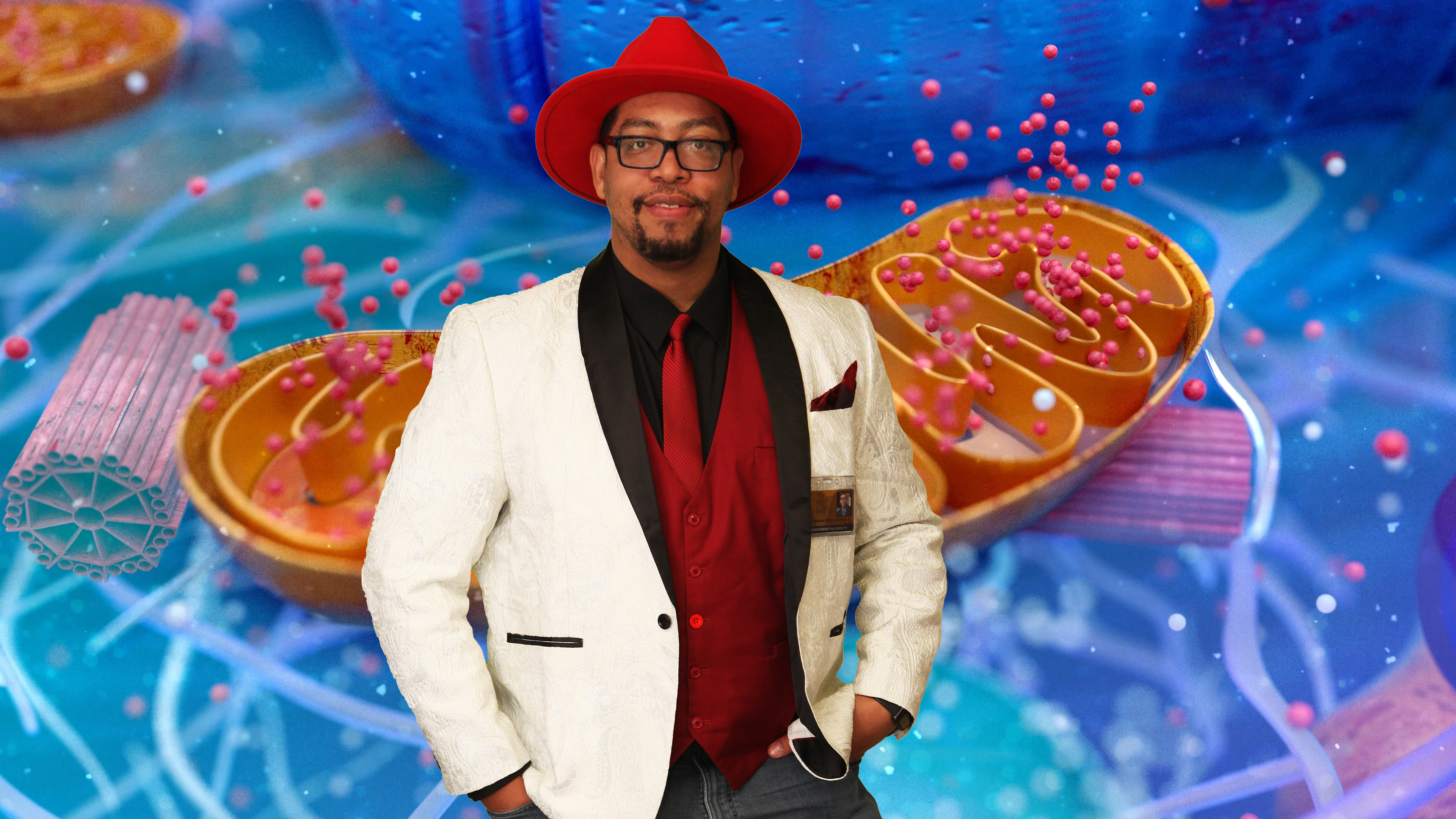
Dr. Antentor Hinton, Jr. is a tenure-track Assistant Professor in the Department of Molecular Physiology and Biophysics in Vanderbilt University’s School of Medicine Basic Sciences, a member of the Vanderbilt Diabetes Research and Training Center, and the Ernest E. Just Early Career Investigator. Dr. Hinton’s research projects—including those funded by United Negro College Fund/Bristol Myers Squibb, the Burroughs Wellcome Fund’s (BWF) Career Awards at the Scientific Interface, and NIH Superfund Research Program—aim to elucidate insulin-mediated molecular mechanisms that regulate cristae dynamics and to identify molecular mechanisms that underlie molecule transfer between and morphological changes in the mitochondria and endoplasmic reticulum (ER) that can be altered in pathophysiological states, such as diabetes or cardiovascular disease. More recently, Dr. Hinton received the Chan Zuckerberg Initiative Science Diversity Leadership Award for his focused ion beam-scanning electron microscopy (FIB-SEM) and serial block facing-scanning electron microscopy (SBF-SEM) imaging work on mitochondrial networks in human disease. Dr. Hinton supervises 2 Staff Scientists, 5 postdocs, 3 research techs, 5 grad students, and 12 undergraduates. Dr. Hinton’s laboratory has published in Aging Cell, Hypertension, Circulation Research, American Journal of Physiology – Heart and Circulatory Physiology, Journal of Cellular Physiology, and Advanced Biology. The Hinton lab have collaboratively published in The Journal of Clinical Investigation, Nature Communications, Cell Metabolism, eLife, Cell Reports, Journal of Cell Science, Biological Psychiatry, Endocrinology, and Metabolism.
Dr. Hinton is an active member of the Endocrine Society. Currently, Dr. Hinton serves on the following six editorial boards: Aging Cell, Journal of Cell Physiology, Circulation Research, American Journal of Physiology – Heart and Circulatory Physiology, and Advanced Biology. Dr. Hinton is also an associate editor of the specialty section of Bioenergetics in Frontiers in Molecular Biosciences. To date, he has published 126 papers (116 published and 10 in preprint or in press), gleaned 55 awards, and given over 214 invited talks.
Dr. Hinton is a former BWF Postdoctoral Enrichment Scholar, EE Just Postgraduate Fellow in Life Sciences, and Ford Foundation Fellow at the University of Iowa in the Department of Internal Medicine in the Division of Endocrinology. Dr. Hinton worked in the laboratory of Dr. E. Dale Abel, the Chair and Departmental Executive Officer of Internal Medicine and Director of the Fraternal Order of Eagles Diabetes Research Center (now UCLA). Under the co-mentorship of Dr. Abel and Dr. Renata O. Pereira, he elucidated the mechanisms by which insulin signaling regulates optic atrophy 1 protein (OPA1) activity in skeletal muscle. Dr. Hinton made the exciting observation that loss of OPA1 in skeletal muscle in vivo and in cultured myotubes is associated with an increase in mitochondria-ER contact sites (MERCs). Notably, MERCs are characterized as specialized membranes enriched in specific proteins believed to be essential for calcium flux, lipid transfer, and mitochondrial morphology. In addition to this project, Dr. Hinton has spent the past several years perfecting methodology to rigorously quantify these contact sites using electron microscopy and has become an expert in the ultrastructural analysis of inter-organellar interactions in muscle cells. Notably, Dr. Hinton secured a Visiting Postdoctoral Fellow Appointment at the Mayo Clinic, where he conducted research in collaboration with Dr. Jeffrey Salisbury, a world-renowned cell biologist who runs Mayo’s Central Microscopy Core. It was under his mentorship, that Dr. Hinton advanced his training in SBF-SEM and transmission electron microscopy quantification.
Dr. Hinton seeks to be an optimal mentor for all individuals. He has personally mentored over 90 graduate and undergraduate students, who have achieved or are currently in the process of acquiring a post-baccalaureate certificate, master’s degree, doctoral degree, or Doctor of Medicine degree. He is an attentive and thoughtful mentor and has successfully obtained competitive support for his mentees from multiple universities and external sources. His mentees have gone on to have tremendous careers (e.g. Kit Neikirk named Marshall Scholar will study at University of Edinburgh and University College London | Vanderbilt University; awarded Fulbright Scholarship; attended top schools, medical students securing residency at organizations affiliated with Yale University; post docs obtaining funding from the United Negro College Fund’s EE Just Biomedical Research Scholar; admission into UCLA’s Medical Scientist Training Program).
In 2016, Dr. Hinton graduated from the Integrative Molecular and Biomedical Sciences Ph.D. Program at Baylor College of Medicine (Baylor). During his time at Baylor, Dr. Hinton served on the Initiative for Maximizing Student Development Committee and was Vice President of the African American Men in Science Association. Notably, Hinton was first author on 2 and co-author on 15 publications during his time as in the laboratory of Dr. Yong Xu, an Associate Professor of Pediatrics. The publications on which Dr. Hinton was the first author demonstrated that nuclear receptor, estrogen receptor alpha and coactivator, and steroid coactivator 1 in extra-hypothalamic sites are important for the control of stress-induced hypertension, blood pressure maintenance, and aortic stiffness in females. Overall, Dr. Hinton’s coauthor publications focused on identifying estrogenic sites of action in the brain that control energy homeostasis and binge eating and explored new hypothalamic energy expenditure roles after the ablation of ion channels, deleting novel nuclear receptors, or stimulating with chemical compounds. During his PhD training, Dr. Hinton won 26 career development, travel, research, oral presentation and poster, and graduate fellowship awards. Dr. Hinton was co-author on three publications (focused on bone cancer, and one was a clinical paper) during his rotations before joining his dissertation laboratory..
Before earning his doctorate, Dr. Hinton graduated from the NIH SMART PREP at Baylor in 2010, where he finished first in the class. Lastly, Dr. Hinton’s professional education started at Winston-Salem State University, where he earned a bachelor’s degree in biology with a minor in chemistry. Dr. Hinton also played collegiate tennis for Winston-Salem State University. During his time on the team, he received the Coach’s Award in his senior year and made the Commissioner’s All-Academic Team for the Mid-Eastern Athletic Conference each year that he played. Dr. Hinton enjoys tennis because, by analogy, it allows him to improve his scientific approach by looking at science from different angles. Lastly, Hinton also participated in the Tri-Beta Biological Honors Society and MARC U*STAR Scholars Program as an undergraduate student.