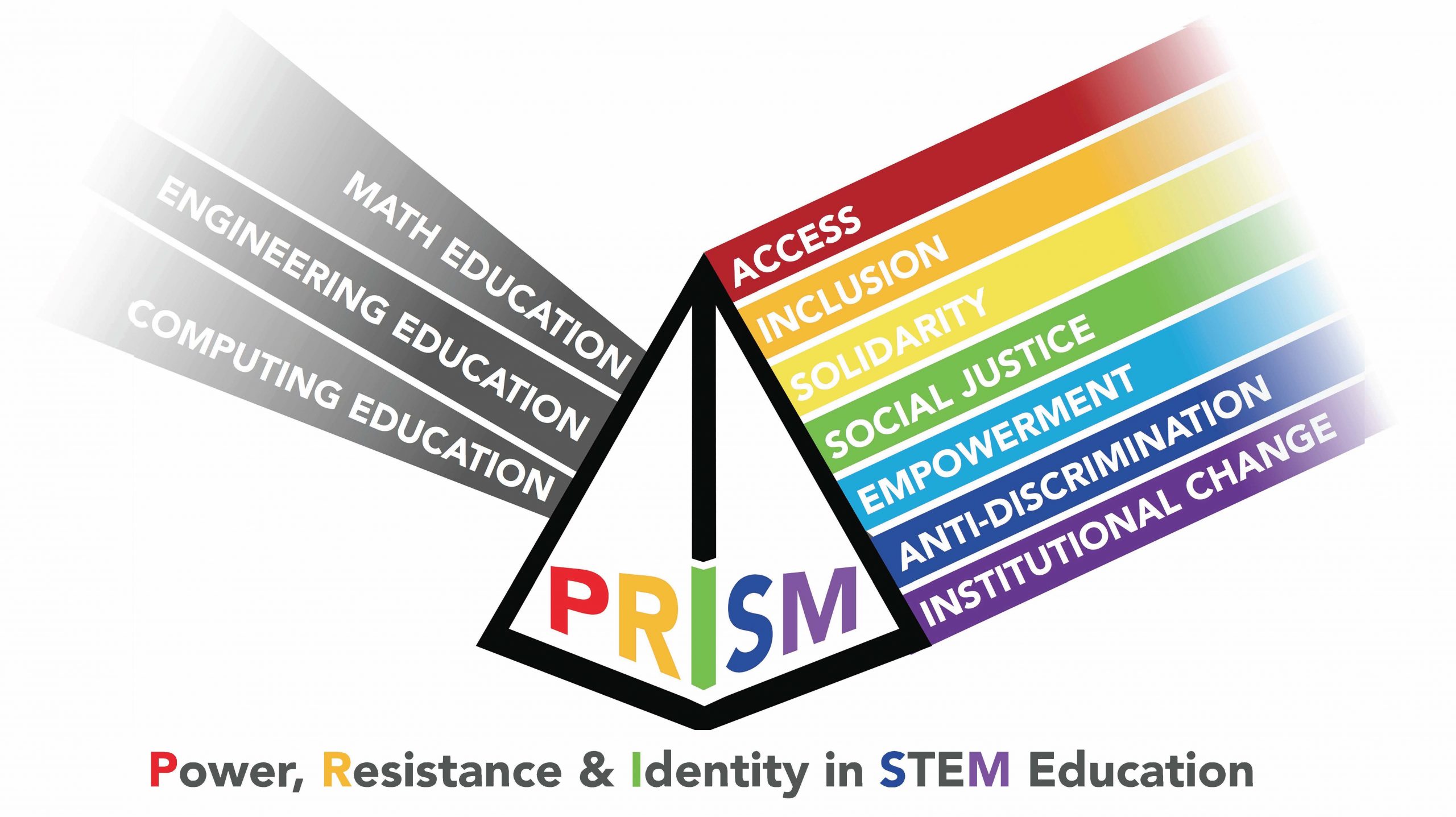
Established in 2016, PRISM (Power, Resistance & Identity in STEM Education) is a research lab at Vanderbilt University – Peabody College of Education & Human Development. Directed by Dr. Luis A. Leyva, the PRISM Lab is an intergenerational and interdisciplinary collective of faculty, graduate, and undergraduate researchers from programs across and beyond the Vanderbilt campus. The lab houses projects that center the voices of historically marginalized student populations to inform justice-oriented educational opportunities in undergraduate STEM (science, technology, engineering, and mathematics). PRISM projects have received external funding support from the Bill & Melinda Gates Foundation, Kapor Center, National Academy of Education, National Science Foundation, and Spencer Foundation.

Intersectionality is a perspective from Black feminist thought that guides research in the PRISM Lab. This perspective recognizes unique forms of oppression and agency at the juncture of multiple power systems, including racism and cisheteropatriarchy. PRISM projects examine how STEM educational contexts shape variation in historically marginalized populations’ experiences across intersections of social identities, including race, gender, and sexuality. This intersectional lens sheds light on STEM educational practices that disrupt interlocking power systems for identity-affirming opportunities to learn, in addition to student populations’ strategic resistance for STEM success on their terms.

The lab’s acronym, PRISM, pays homage to critical race scholar and legal theorist Dr. Kimberlē Crenshaw who coined the term, intersectionality. Crenshaw conceptualized intersectionality as a “prism” to understand dilemmas and oversights that multiply-marginalized individuals experience in society. PRISM research holds up a prism to historically marginalized student populations’ narratives of educational experiences for illuminating intersectional oppression, agency, and support in undergraduate STEM.
 Our collaborative work in the PRISM Lab embodies intersectionality’s commitment to praxis for equity and justice. Robust diversity of social experiences and identities among lab members ensures that student participants see themselves reflected in us as research leaders. Multiplicity of academic and professional backgrounds in our lab contributes to research that generates interdisciplinary solutions for educational injustices, which cannot be solved by relying solely on STEM disciplines as sites of epistemological harm. Destabilizing traditional power hierarchies in researcher-participant relations, PRISM project methodologies draw on autobiographies, interviews, and journaling that position historically marginalized populations as knowledge sources for disrupting undergraduate STEM as a white, cisheteropatriarchal space. The PRISM Lab also re-humanizes educational research in the academy. As lab members, we collectively process our intersectional realities in higher education as well as interrogate our positionalities to ensure identity-affirming, transformative experiences for STEM student participants.