
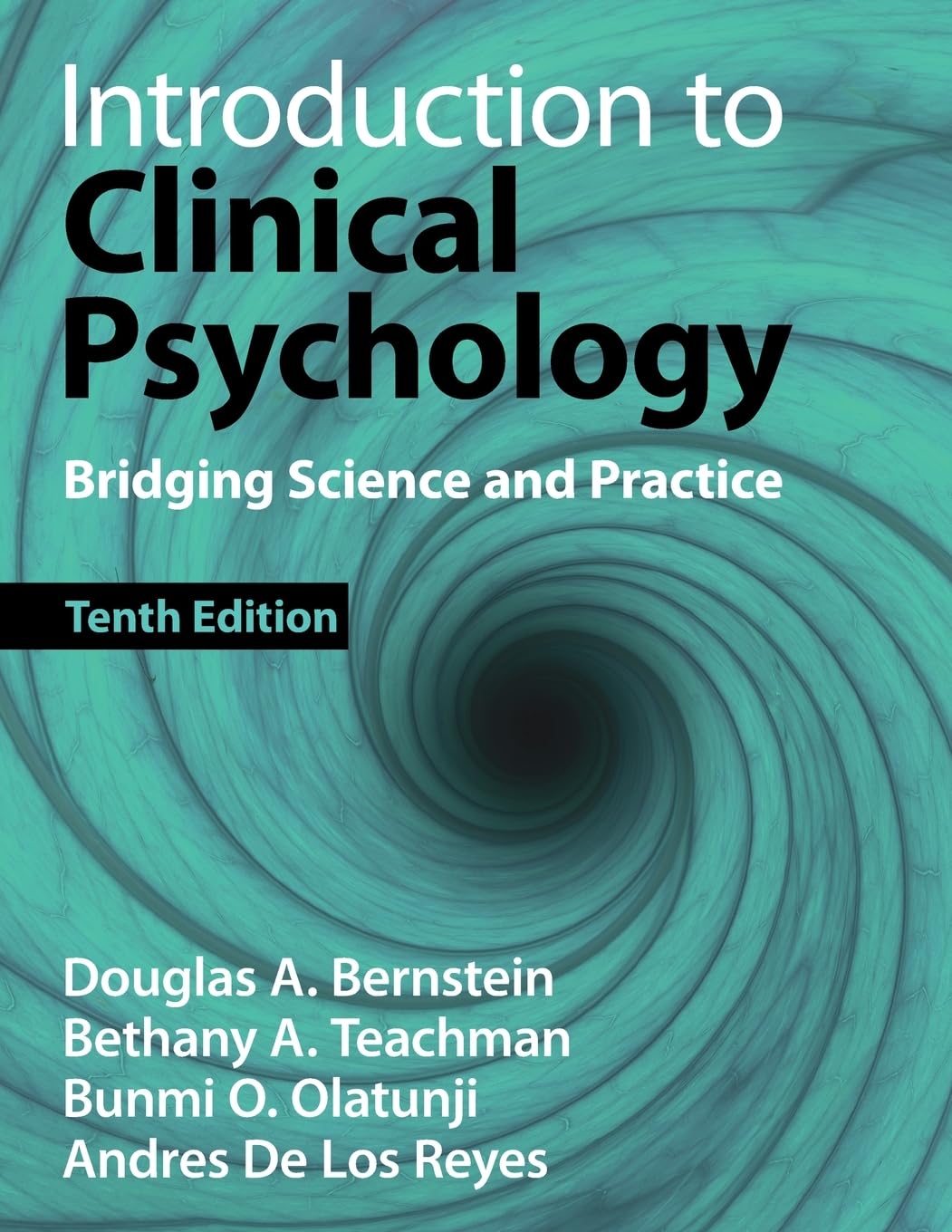
Introduction to Clinical Psychology
Fully updated and revised, the tenth edition of this bestselling textbook introduces clinical psychology as a bridge between science and practice. Featuring over 1000 new references, the revised text includes additional coverage of digital mental health, diversity, and identity, and the practice of evidence-based clinical science. Coverage of such topics as emerging models for clinical training and accreditation, new approaches to diagnosing and classifying mental illness, and changes in healthcare legislation ensure that students will understand the very latest trends in the subject. The pedagogical focus of previous editions is maintained. 'Thinking Scientifically' sections in each chapter break down how to evaluate conflicting findings and use them to draw conclusions, while clinical vignettes bring concepts and theories to life. 'In Review' tables at the end of each major section prompt students to review material and test their comprehension. The text is accompanied by a full suite of online teaching supports.
Introduction to Clinical Practice: Bridging Science and Practice
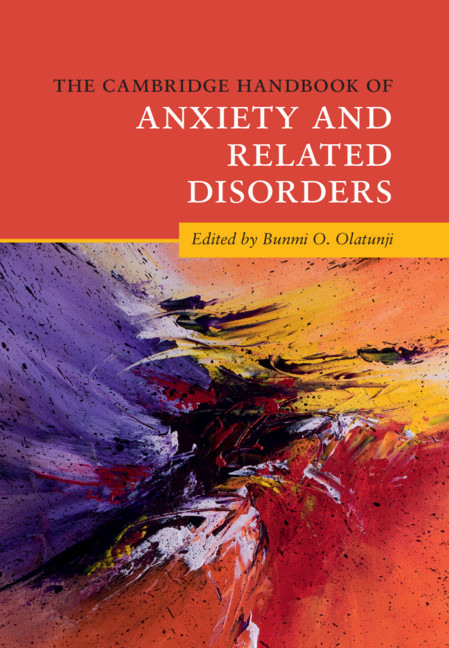
The Cambridge Handbook of Anxiety and Related Disorders
This Handbook surveys existing descriptive and experimental approaches to the study of anxiety and related disorders, emphasizing the provision of empirically-guided suggestions for treatment. Based upon the findings from the Diagnostic and Statistical Manual of Mental Disorders (DSM-5), the chapters collected here highlight contemporary approaches to the classification, presentation, etiology, assessment, and treatment of anxiety and related disorders. The collection also considers a biologically-informed framework for the understanding of mental disorders proposed by the National Institute of Mental Health’s Research Domain Criteria (RDoC). The RDoC has begun to create a new kind of taxonomy for mental disorders by bringing the power of modern research approaches in genetics, neuroscience, and behavioral science to the problem of mental illness. The framework is a key focus for this book as an authoritative reference for researchers and clinicians.
- Highlights contemporary approaches to the classification, presentation, etiology, assessment, and treatment of anxiety and related disorders
- Integrates findings from the Diagnostic and Statistical Manual of Mental Disorders (DSM-5) and the Research Domain Criteria (RDoC)
- Surveys existing descriptive and experimental approaches to the study of anxiety and related disorders
- Emphasizes the provision of empirically-guided suggestions for treatment
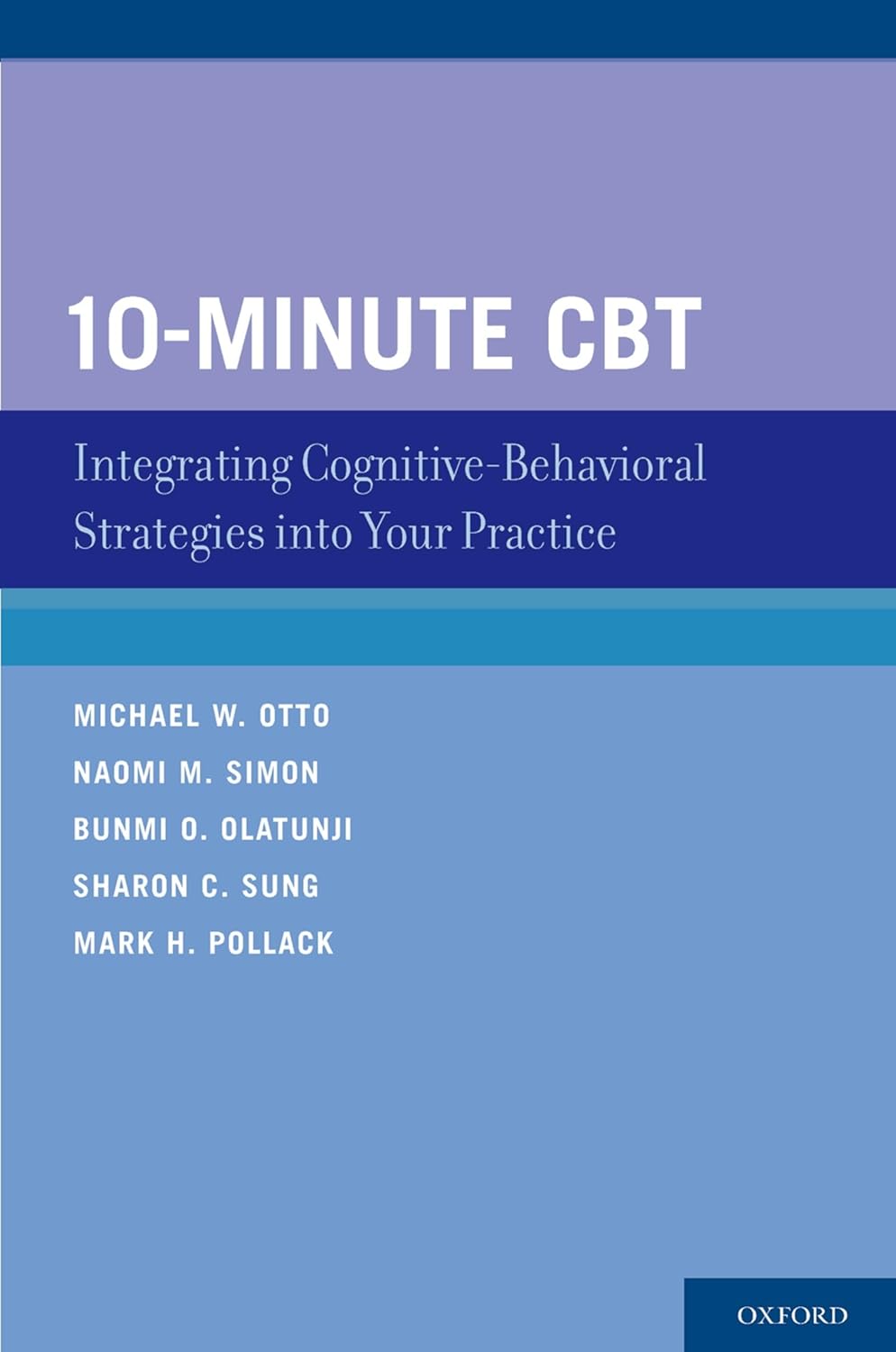
10-Minute CBT
It is well-established that cognitive-behavioral therapy (CBT) is a rich and effective tool for treating a range of anxiety and mood disorders and behavioral disturbances. Most clinicians, however, have not been formally trained in how to administer CBT, and integrating one of the many available manuals detailing week-by-week protocols into their individual clinical practices is a daunting task. Whether brief interventions are desired for use in medication visits or whether key elements of CBT are needed for use in an eclectic treatment practice, clear instruction is needed on how to improve patient outcomes by adapting key components of cognitive-behavioral interventions.
10-Minute CBT provides such guidance with a clear and straightforward account of the principles of CBT that fit into the realities of current practice for clinicians from any interventional perspective. Instead of offering a full regimented program of treatment, this book provides the philosophy and elements of CBT so that select targeted interventions can be integrated into already-established clinical practice. This book offers a comprehensive overview of disorder-specific strategies and core principles of CBT, as well as the empirical base that supports these principles. Other features include therapist-patient dialogues, an intervention troubleshooting guide, and “treatment principle” boxes that provide rapid identification of key concepts. Written by a team of experts representing a range of practice formats, this book offers tools that will make CBT accessible to and employable by all practitioners who wish to incorporate elements of CBT into their treatment.
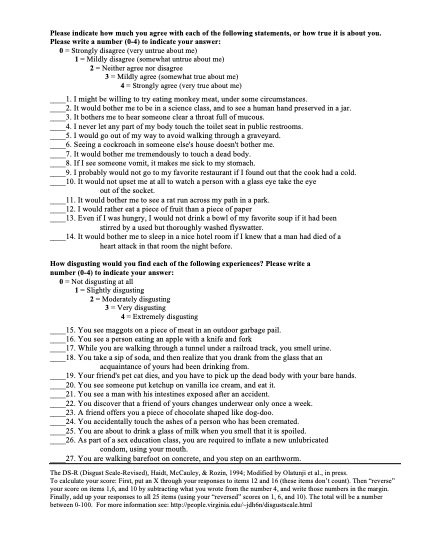
Measures
-
Disgust Scale-Revised (DS-R)
-
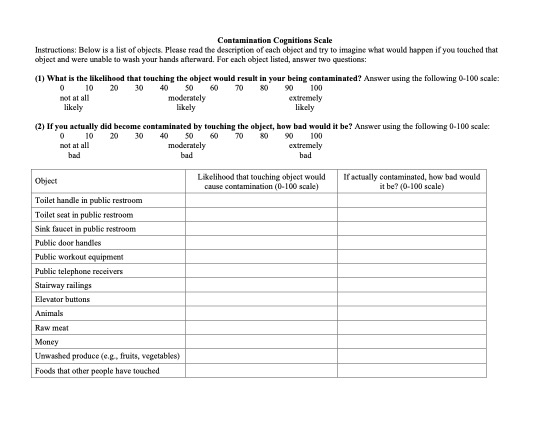
Contamination Cognitions Scale
-
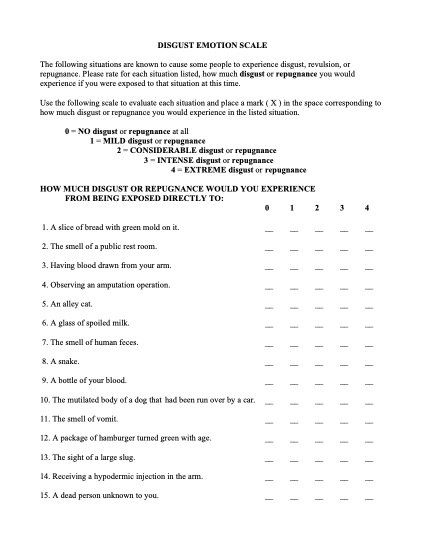
Disgust Emotion Scale (DES)
-
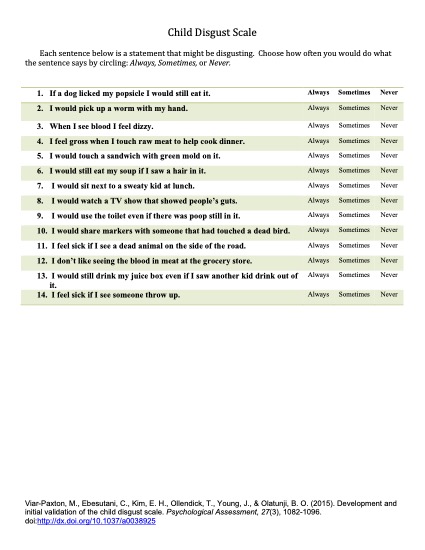
Child Disgust Scale (CDS)
-
Medical Fear Survey - Short Form (MFS-SF)
-
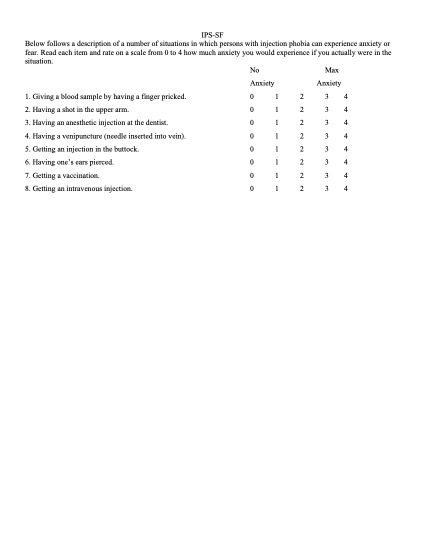
Injection Phobia Scale - Short Form (IPS-SF)
-
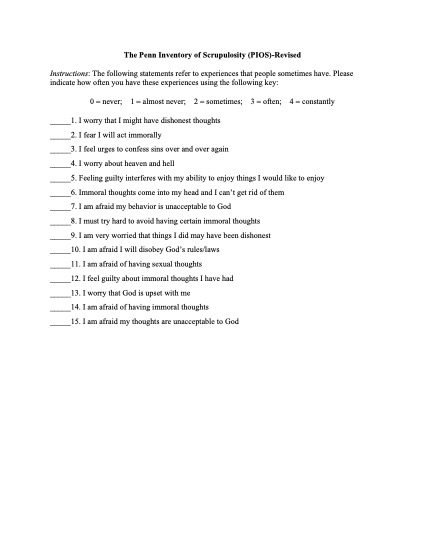
Penn Inventory of Scrupulosity - Revised
-
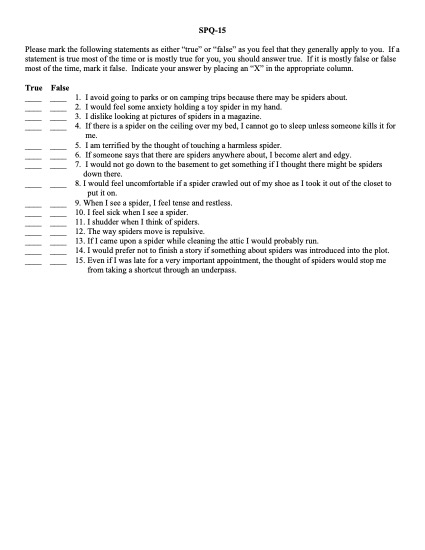
Spider Phobia Questionnaire - 15 (SPQ-15)
-
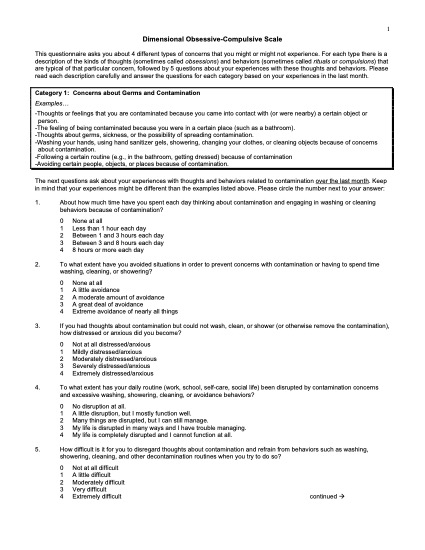
Dimensional Obsessive-Compulsive Scale

Organizations
-
Anxiety and Depression Association of America
ADAA raises awareness about the causes of and best treatments for anxiety, depression, and related disorders by disseminating cutting edge science, promoting evidence-based clinical practice, and educating professionals and the public.
-
American Psychiatric Association
To champion psychiatrists’ medical leadership in advancing mental health and delivering high-quality care to improve patients’ lives.
-
American Psychological Association
APA is the leading scientific and professional organization representing psychology in the United States, with 172,000 researchers, educators, clinicians, consultants, and students as its members.
-
Association for Behavioral and Cognitive Therapies
The Association for Behavioral and Cognitive Therapies is a multidisciplinary organization committed to the enhancement of health and well-being by advancing the scientific understanding, assessment, prevention, and treatment of human problems through the global application of behavioral, cognitive, and biological evidence-based principles.
-
Association for Psychological Science
APS is the scientific home of thousands of leading psychological science researchers, practitioners, teachers, and students from around the world. We are dedicated to advancing scientific psychology across disciplinary and geographic borders and committed to: Disseminating psychological science to the general public, promoting the integration of scientific perspectives across our diverse field and with other scientific disciplines, incentivizing global collaboration among researchers, catalyzing the further development of psychological science, & promoting the application of psychological science to public policy.
-
National Institute of Mental Health
The National Institute of Mental Health (NIMH) is the lead federal agency for research on mental disorders. NIMH is one of the 27 Institutes and Centers that make up the National Institutes of Health (NIH), the largest biomedical research agency in the world. NIH is part of the U.S. Department of Health and Human Services (HHS).
Cognitive Behavioral Therapy Institute
CBT Institute offers consultation/supervision, psychotherapy, and education to improve mental health education and services.